
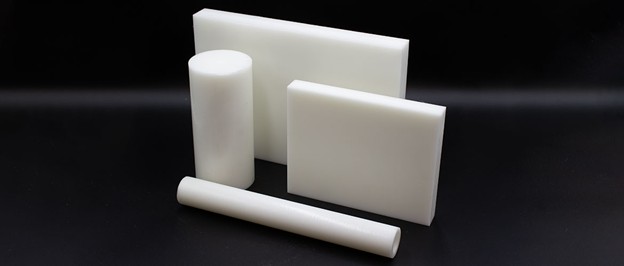
We are often asked a simple question that shows up in many material selection conversations: What is the difference between Acetal, Copolymer Acetal, Homopolymer Acetal, and Delrin®? They are related materials, but not interchangeable. The differences come from the way the polymer chains are built and how those structures influence performance.
Quick Answer:
Acetal is the general name for polyoxymethylene (POM) plastics, which include both homopolymer and copolymer grades. Delrin® is a brand name for homopolymer acetal. Delrin® offers higher strength and stiffness, while copolymer acetal provides better resistance to hot water, steam, chemicals, and has lower centerline porosity. Acetal plastics are also commonly referred to as POM, while Delrin® is often used informally to describe homopolymer acetal.
What Is Acetal (POM)?
Acetal is the general term for a family of plastics known chemically as polyoxymethylene, or POM. This family includes both homopolymer acetals and copolymer acetals. Delrin® fits inside this group, but the reverse is not true. Not all acetals are Delrin®.
Delrin® is a trademarked name for the most widely known homopolymer acetal. It was originally invented by DuPont and is still recognized as one of the strongest acetal options available.
How Do Homopolymer and Copolymer Acetal Differ?
To understand how Delrin® differs from other acetals, it helps to look at how the molecular chains are arranged (Figure 1.)
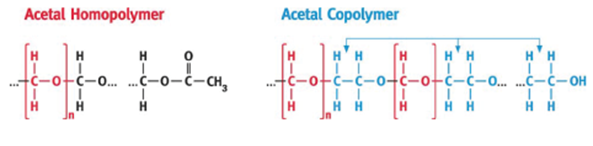
Homopolymer acetal is made from one single repeating monomer as shown in Figure 1. This creates a very uniform structure with a high level of crystallinity. Delrin® is the best-known example of a homopolymer acetal.
Copolymer acetal uses two or more different monomers as shown in Figure 1. This small structural change affects performance in a few key areas, even though both types remain semi-crystalline materials with similar overall characteristics.
Both materials provide FDA and USDA compliance, excellent machinability, dimensional stability, strength, stiffness, and wear resistance. The differences are subtle but can matter depending on the application.
Key Performance Differences
Copolymer Acetal (POM-C) vs. Delrin (POM-H) Key Properties Comparison Table
| Property | Acetal Copolymer (POM-C) | Delrin® (POM-H) | Winner – Key Takeaway |
|---|---|---|---|
| Strength & Stiffness | Slightly lower | 10-15% higher | Unfilled Delrin® is better; it has about 10 to 15 percent higher strength and stiffness than copolymer acetal. |
| Toughness & Ductility | Slightly higher | Slightly lower | Copolymer is better; it offers slightly better toughness and ductility. |
| Chemical Resistance | Better in chlorine environments | Good | Copolymer wins chemical resistance. The chemical resistance is generally similar between the two. The specific chemical, temperature, and concentration all influence performance. Copolymer acetal usually performs better when exposed to solutions that contain chlorine. |
| Hot Water / Steam | Better hydrolysis resistance | Lower resistance | Copolymer acetal is better; it holds up better in hot water and steam than Delrin. It resists hydrolysis more effectively and maintains dimensional stability during long periods of exposure. |
| Continuous Use Temp | 180°F | 180°F | No major difference: Both materials carry a continuous service rating of 180 degrees Fahrenheit. Copolymer acetal has been shown to handle long-term thermal degradation better than homopolymer acetal. |
| Heat Deflection Temp (264 psi), °F | 220°F | 250°F | Delrin® is better; it has a higher heat deflection temperature of 250°F vs. 220°F for copolymer acetal, which allows it to maintain its mechanical properties during short, elevated-temperature conditions. |
| Wear Resistance | Similar | Similar | No major difference: Both materials show similar performance in wear, limiting PV, and k-factor when using unfilled grades. |
| Machinability | Very good | Better for tight tolerances | Both materials machine very well. Delrin® offers an advantage for small-diameter parts and thin-walled components due to its higher stiffness. This makes it a strong choice for use with screw machines or high-speed CNC lathes. |
| Centerline Porosity | Minimal | Higher | Copolymer is better for thick sections as it has minimal porosity. |
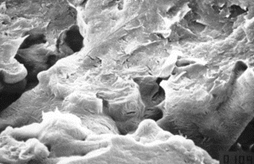
Appearance and Centerline Porosity
Acetal stock shapes often contain microporosity in the centerline of rods and plates. This is a known characteristic of the extrusion process.
Additional Grades
Both homopolymer and copolymer acetals are available in filled and enhanced versions. These include grades for improved wear, electrostatic dissipation, metal detection, and other specialized needs. Click here for our complete catalog of POM (Acetal & Delrin® Materials)Typical Delrin® Acetal & Copolymer Acetal Stock Shape Property Comparison:
| Property | Test Method | Acetal Copolymer POM-C | Acetal Homopolymer POM-H (Delrin® 150) | POM-H Delrin® 500/550 | POM-H Delrin® 527 UV |
|---|---|---|---|---|---|
| Tensile Strength, psi | ASTM D638 | 9,500 | 11,000 | 10,000 | 10,000 |
| Tensile Elongation, % | ASTM D638 | 30 | 30 | 15 | 15 |
| Tensile Modulus, psi | ASTM D638 | 400,000 | 450,000 | 450,000 | 450,000 |
| Rockwell Hardness, R | ASTM D785 | R120 | R122 | R120 | R120 |
| Heat Deflection Temperature (264psi), oF | ASTM D648 | 220 | 250 | 270 | 270 |
| Continuous Use Temperature, oF | 180 | 180 | 180 | 180 | |
| Specific Gravity | ASTM D792 | 1.41 | 1.41 | 1.42 | 1.42 |
Delrin® vs. Acetal FAQs
No. Acetal is the general name for a family of plastics known as polyoxymethylene (POM). This family includes both homopolymer acetals and copolymer acetals.
Delrin® is a specific brand name of homopolymer acetal, but not all acetals are Delrin®. In short: all Delrin® is acetal, but not all acetal is Delrin®.
The difference comes from how the polymer chains are constructed.
Homopolymer acetal, such as Delrin®, is made from a single repeating monomer, resulting in a more uniform and highly crystalline structure. This gives it higher strength and stiffness. Copolymer acetal uses two or more monomers, which slightly reduces stiffness but improves toughness, chemical resistance, and long-term stability, especially in hot water and steam.
Unfilled Delrin® typically offers about 10-15% higher strength and stiffness compared to unfilled copolymer acetal. This makes Delrin® a strong choice for small, thin, or highly detailed machined parts where rigidity is critical. Copolymer acetal, while slightly less stiff, often provides better toughness and resistance to cracking.
Copolymer acetal generally performs better in hot water, steam, and environments containing chlorine or aggressive cleaning agents. It resists hydrolysis more effectively and maintains dimensional stability during long-term exposure. While Delrin® has a higher heat deflection temperature for short-term heat exposure, copolymer acetal is usually preferred for continuous wet or chemical service.
Centerline porosity is a known characteristic of extruded acetal stock shapes.
Copolymer acetal typically has significantly less centerline porosity than Delrin®. Delrin®, as a homopolymer, often shows more noticeable porosity in larger diameters and thick plates, which can lead to mechanical weakness or leakage in pressure-sensitive applications. Because of this, larger rod diameters and thick plates are more commonly available in copolymer acetal.
Choosing Between Delrin® and Copolymer Acetal
Customers tend to choose Delrin® when they need higher mechanical properties or when they are machining small, thin, or highly detailed parts. The higher stiffness of Delrin® can make a significant difference in these situations.
Copolymer acetal is often selected when toughness, reduced centerline porosity, or large cross-sections are required. Many larger sizes simply are not available in Delrin® due to porosity concerns.
In many general applications, either grade will work. The differences become important when the design places demand on strength, size, hot water exposure, or machining conditions.
Click here for our complete catalog of POM (Acetal & Delrin® Materials)
Need Help with Delrin Or Acetal?
Our expert customer and technical service teams can assist with all grades of Delrin® and Acetal plastic sheet, rod, and tube, as well as CNC-machined and injection-molded parts. We can also guide you in selecting the appropriate material for your application and offer design considerations to optimize part performance.
Contact Us Call 1-800-444-3485